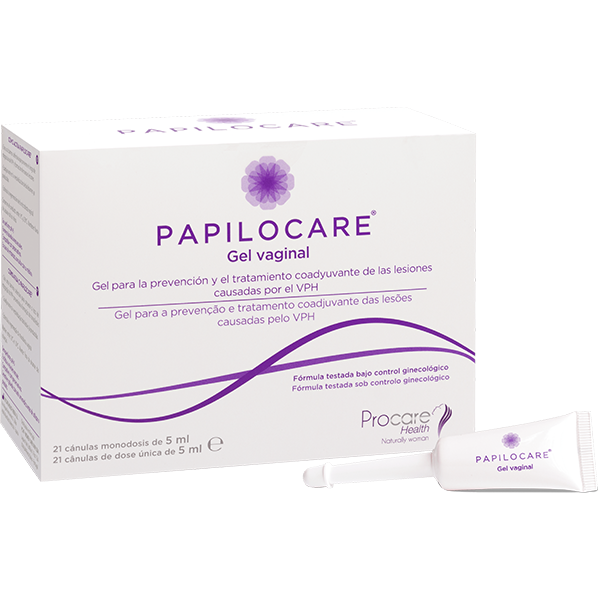







Papilocare: Promising results from the PAPILOCAN Clinical Trial

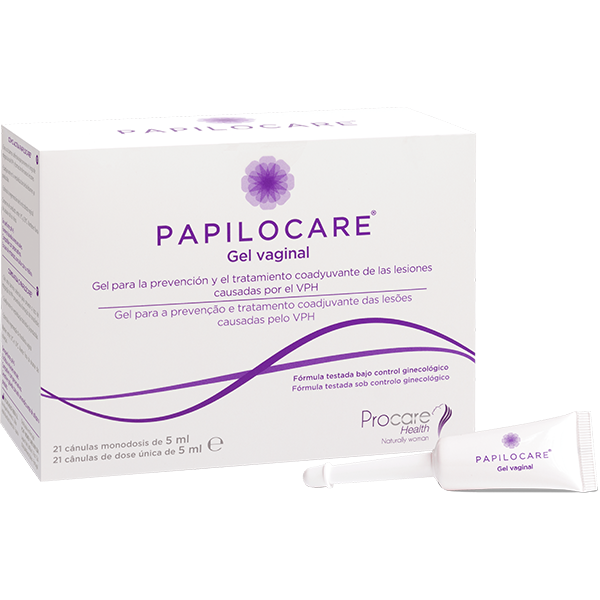
A clinical trial of Papilocare vaginal gel has reported promising findings on whether its effects continue after
treatment ends.
The Papilocan clinical trial (NCT04210336) was a randomised, double-blind study sponsored by the product’s manufacturer. Participants either received Papilocare for six months (the Papilocare group), or a placebo with no active ingredient (the control group). The Papilocare group used the enhanced regimen:
- 1 tube of Papilocare vaginal gel every day for three months with a pause during menstruation or one week for those who did not have periods
- 1 tube every other day for the subsequent three months with a pause during menstruation or one week for those who did not have periods
Average age of the study participants was 41. 84% of patients had so called high risk HPV strains, including 30% with HPV 16 or 18. 25% of the participants had been vaccinated against HPV, 10% with the first generation and 15% with the second generation (vaccines for 9 strains).
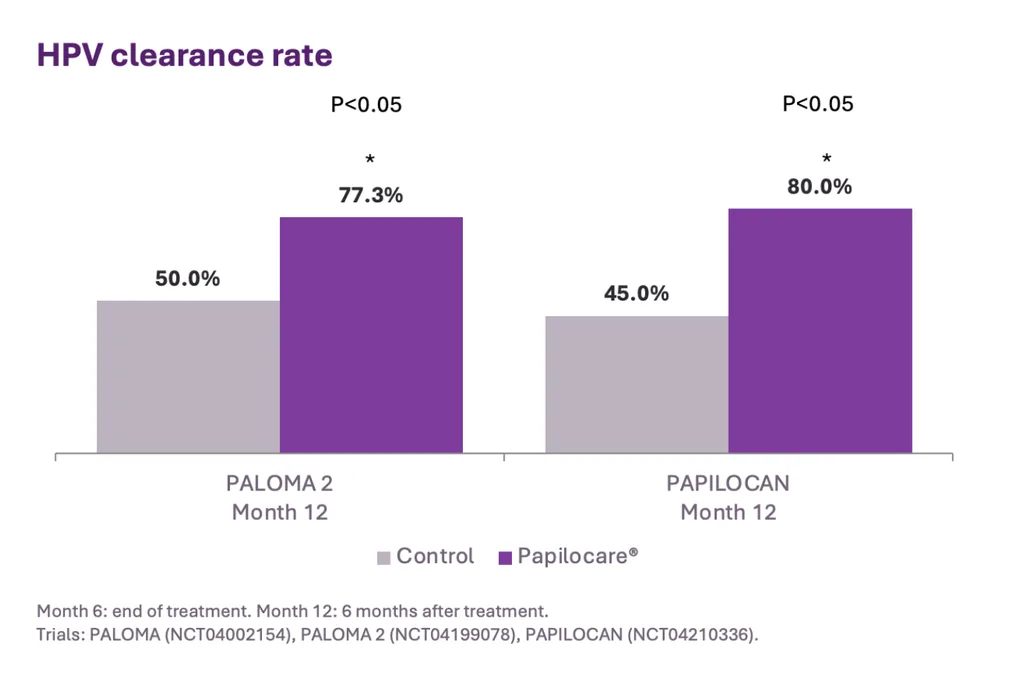
Six months after treatment ended, participants were invited back for a cervical smear and colposcopy (this was 12 - months after treatment started). 98 patients (48 in the Papilocare Group and 50 in the control group) were evaluated. At this visit, 80% of participants in the Papilocare group tested negative for HPV, compared with 45% in the control group. With p=0.037, the finding was statistically significant.
The findings are consistent with 12-month data from the Paloma 2 study and add to the evidence about how long the effects of Papilocare may last after treatment.
A clinical trial of Papilocare vaginal gel has reported promising findings on whether its effects continue after
treatment ends.
The Papilocan clinical trial (NCT04210336) was a randomised, double-blind study sponsored by the product’s manufacturer. Participants either received Papilocare for six months (the Papilocare group), or a placebo with no active ingredient (the control group). The Papilocare group used the enhanced regimen:
- 1 tube of Papilocare vaginal gel every day for three months with a pause during menstruation or one week for those who did not have periods
- 1 tube every other day for the subsequent three months with a pause during menstruation or one week for those who did not have periods
Average age of the study participants was 41. 84% of patients had so called high risk HPV strains, including 30% with HPV 16 or 18. 25% of the participants had been vaccinated against HPV, 10% with the first generation and 15% with the second generation (vaccines for 9 strains).
Six months after treatment ended, participants were invited back for a cervical smear and colposcopy (this was 12 - months after treatment started). 98 patients (48 in the Papilocare Group and 50 in the control group) were evaluated. At this visit, 80% of participants in the Papilocare group tested negative for HPV, compared with 45% in the control group. With p=0.037, the finding was statistically significant.
The findings are consistent with 12-month data from the Paloma 2 study and add to the evidence about how long the effects of Papilocare may last after treatment.

Social
Sign up to receive our newsletter and a welcome discount code:
Disclaimer: Information on this website is provided for informational purposes only and not intended as a substitute for the advice provided by your physician or other healthcare professional. You should not use the information on this website for diagnosing or treating a health problem or disease, or prescribing any medication or other treatment. For medical advice, diagnosis and prescription, please consult a healthcare professional. More Information >
Disclaimer: Information on this website is provided for informational purposes only and not intended as a substitute for the advice provided by your physician or other healthcare professional. You should not use the information on this website for diagnosing or treating a health problem or disease, or prescribing any medication or other treatment. For medical advice, diagnosis and prescription, please consult a healthcare professional.
© LivBio Limited 2024 All Rights Reserved.
