






Our Guide to HPV
- What is HPV?
- Can HPV cause health problems?
- I've tested positive for HPV. What happens next?
- How are changes to cervical cells treated?
- Who is less likely to clear HPV?
- Can HPV come back?
- Can I get infected with HPV again?
- Is there anything I can do to help clear an HPV infection?
- Should I consider health care products or supplements?
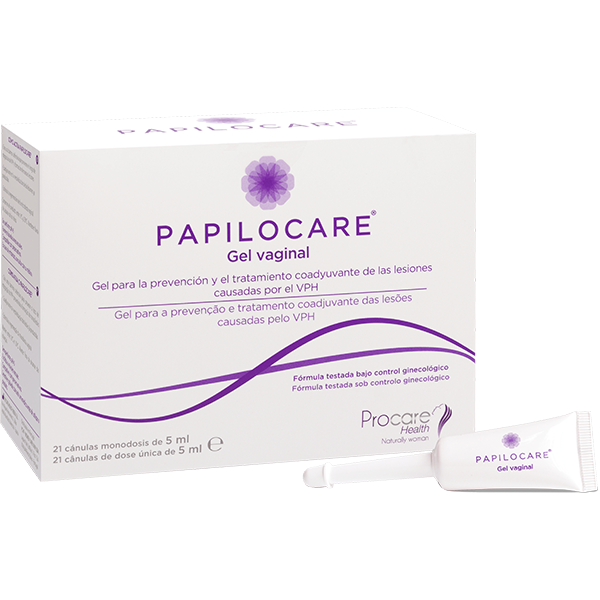
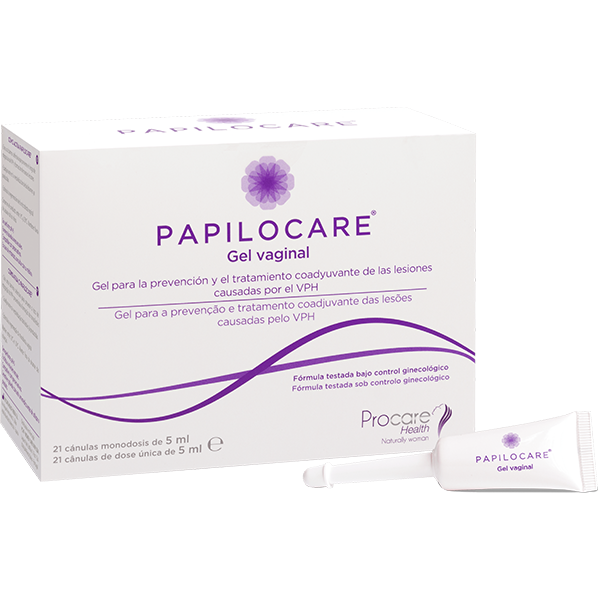
- What is Papilocare® vaginal gel?
- When should I consider Papilocare® vaginal gel?
- Is watchful waiting also a reasonable approach?
- What about AHCC®?
- Papilocare® Immunocaps
- Regular screening
What is HPV?
Human papillomavirus, or HPV, is a very common infection, which affects the skin, and cells that line the inside of the body, including the genital area, vagina and cervix.
HPV is spread by skin-to-skin contact, and is easy to catch during sex. You don’t have to have sexual intercourse (penetrative sex), as it’s possible to catch HPV through any skin-to-skin contact in the genital area.
HPV is considered to be the most common sexually transmitted infection (STI). Most sexually-active people will get HPV at some point in their lives, but it often causes no symptoms, and the body’s own immune system will clear it over time. As a result, many people will never know they’ve had it.
Can HPV cause health problems?
There are more than 100 types of HPV, many of which are completely harmless.
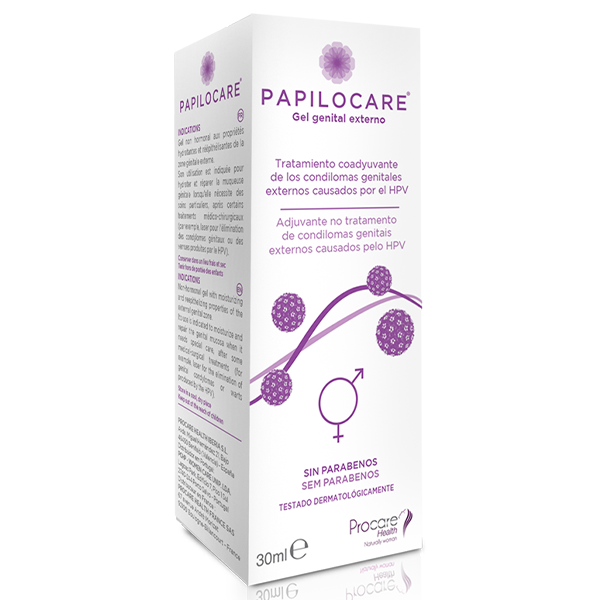
Some types of HPV can cause genital warts, which can be treated with conventional surgery, laser surgery, freezing or with a topical (locally applied) cream or liquid.
There is also a number of so-called ‘high risk’ types of HPV, which can increase the risk of developing cancer of the cervix, vulva or vagina.
However, it’s important to remember that cervical cancer is not common: according to Cancer Research UK, it’s the 14th most common cancer in women in the UK1.
If you have not been told you have a high-risk type of HPV, you won’t need any further tests until your next cervical smear test (pap test).
I've tested positive for HPV. What happens next?
If you receive a positive result for HPV, there are several possible outcomes, which are described below.
1. HPV clears
This is the most likely outcome. Your own immune system controls the virus until it reaches such low levels that is no longer detectable by a test. You may never develop any changes to the cells of your cervix.
2. HPV remains in the body for longer
Sometimes the immune system doesn’t manage to clear HPV quickly from the body. If a high-risk type of HPV remains in for a long time, it can cause changes to the cells of the cervix.
These changes are called CIN. CIN stands for cervical intraepithelial neoplasia. CIN is not cancer. It describes changed cells on the surface of the cervix. You may hear these described as abnormal cells. There are three grades of CIN:
- CIN1 – mild changes. These often return to normal without treatment.
- CIN2 – moderate changes. Abnormal cells affect up to two-thirds of the thickness of the lining of the cervix.
- CIN3 – more significant changes. Abnormal cells affect more than two-thirds of the thickness of the cervical lining
The higher the grade, the more likely it is that your healthcare professional will recommend closer monitoring or treatment.
How are changes to cervical cells treated?
CIN1
CIN1 usually goes away by itself. Women with CIN1 are therefore usually monitored rather than treated immediately. Studies following women with CIN1 have found that around half of these changes to cervical cells disappear naturally within two years. About one in four persist, while a smaller proportion progress to a higher-grade change. Your healthcare team will tell you when you need your next screening or follow-up.
CIN2
CIN2 is a more significant change, although it can also regress naturally. Studies suggest that around half of CIN2 changes regress naturally, while others persist or progress. One commonly used treatment is LLETZ (large loop excision of the transformation zone), which removes the area where the changed cells have been found.
CIN3
CIN3 is considered a high-grade pre-cancerous change. It does not mean you have cervical cancer. However, CIN3 has a greater risk of eventually developing into cancer if it is left untreated. For this reason, healthcare professionals usually recommend treatment such as LLETZ. It is reassuring to know that cervical cell changes usually develop slowly, over many years. Regular screening and appropriate treatment are important to identify and, if necessary, treat abnormal cells before cancer develops.
Who is less likely to clear HPV?
It is impossible to predict exactly who will clear HPV and who will have a persistent infection. However, several factors are linked with HPV staying in the body for longer or with a greater likelihood of developing significant cervical cell changes.
Smoking
Smoking is one of the lifestyle factors most clearly associated with persistent HPV and cervical cell changes. If you smoke, stopping is one of the most helpful things you can do for both your cervical and general health.
A weakened immune system
The immune system plays an important role in controlling HPV. Certain health conditions and medicines that suppress the immune system can make it more difficult for the body to control the virus. Age and general health may also affect how well your immune system works.
Certain HPV types
Some HPV types are more strongly linked with cervical cell changes than others. HPV16 and HPV18 are particularly important high-risk types. If you have previously had CIN2 or CIN3, you may have a greater risk of developing further abnormalities. This makes attending the follow-up appointments recommended by your healthcare team particularly important.
Persistent HPV
One positive HPV test does not necessarily mean that you will have a long-term infection. Finding high-risk HPV repeatedly over a longer period is more significant. It is persistent infection, rather than a single positive result, that is particularly linked to cervical cell changes.
Previous cervical abnormalities
If you have previously had CIN2 or CIN3, you may have a greater risk of developing further changes to your cervix. This means it is particularly important that you attend the follow-up appointments your healthcare team recommends.
Other factors
Researchers are also studying whether factors such as the natural protective environment of the vagina (the vaginal microbiome), hormones, other infections and general health affect how long HPV remains in the body. Our understanding of these factors is still developing, so these are not things that you need to worry about individually.
Can HPV come back?
Yes, but if you get a positive HPV test after a previous negative result, it does not necessarily mean that you have caught HPV again. HPV can sometimes remain in the body at levels too low to be detected and then become detectable again later. This can be difficult to distinguish from a new infection. It is also possible to catch a different strain of HPV in the future.
Can I get infected with HPV again?
Yes. Having had HPV does not give you complete protection against future HPV infections. If you have a sexual partner who carries HPV, it is possible for the virus to be passed to you. Condoms can reduce the chance of passing HPV between partners, but they don’t provide complete protection because HPV can be present on areas of skin that a condom does not cover.
Is there anything I can do to help clear an HPV infection?
There is no guaranteed way to clear HPV. However, there are sensible steps you can take to support your general health and reduce some of the factors linked to persistent HPV:
Look after your general health
Eating a balanced diet, taking regular exercise, getting enough sleep and avoiding excessive alcohol are good for your general health and immune system.
Stop smoking
If you smoke, stopping is probably the most important lifestyle change you can make in relation to persistent HPV and cervical health.
Consider HPV vaccination
If you have not been vaccinated against HPV, ask your doctor or nurse whether vaccination could benefit you. The vaccine cannot remove HPV that you already have, but it can protect against HPV types covered by the vaccine that you have not previously encountered. The potential benefit will depend on factors including your age and vaccination history, so seek advice from your healthcare professional if you are unsure.
Should I consider health care products or supplements?
There is currently no licensed prescription medicine that eliminates an HPV infection. Some products have been studied for their potential role in supporting HPV clearance or the regression of HPV-related cervical changes.
One is Papilocare® vaginal gel, a product designed for women with HPV-related cervical changes. Clinical studies have reported encouraging results, although the evidence base is still developing.
Another product is AHCC® (Active Hexose Correlated Compound). AHCC® is a natural supplement made from the root-like part of the shiitake mushroom, called mycelia. It has also been researched for its effects on persistent HPV, including in a small clinical study.
Various vitamins, minerals and plant-based supplements are promoted for immune health. Nutrients including vitamins A, C and D, zinc, selenium and iron all have roles in normal immune function. However, there isn’t currently enough evidence to recommend these specifically as treatments for HPV.
What is Papilocare® vaginal gel?
Papilocare® is a vaginal gel designed to support the cervical tissue in women with HPV and low-grade cervical changes, known as lesions. It is available in over 60 countries and in the UK is registered with the MHRA, the government agency that oversees health products. Clinical studies have investigated whether Papilocare® may support the regression of low-grade cervical lesions and HPV clearance.
In the Paloma study programme, researchers reported higher rates of improved lesions and HPV clearance among women using Papilocare®. For example, one study involving 91 patients reported clearance of CIN1 lesions in 86% of women using Papilocare®, compared with 56% in the control group, who received no treatment. Another study involving 101 patients reported that 89% of women with high-risk HPV tested negative after six months of treatment, compared with 54% in the untreated group. Other studies have also reported encouraging findings.
However, further research is needed as these studies were relatively small and in most cases, participants knew whether they were receiving the gel. Larger, high-quality studies would help provide greater certainty about the benefits of Papilocare®.
Papilocare® should therefore be considered a supportive option that may increase the chance of clearing HPV or regressing low-grade cervical changes. It does not replace cervical screening, colposcopy or treatment when these are recommended by your healthcare team.
When should I consider Papilocare® vaginal gel?
It depends on how you feel about the possible benefits and the cost. For the best results, you need to use the product for six months. A six-month course costs around £262 as of September 2026, so the financial commitment may be an important consideration for you.
It is also important to note that while Papilocare® increases the chance of clearing HPV and low-grade changes to the cervix, it is not guaranteed to work for everyone. A minority of people using Papilocare® as recommended, around 15-20%, will still have changed cells and/ or HPV after the six-month treatment.
You might decide to use Papilocare if:
- you have HPV alongside low-grade cervical changes such as CIN1
- you have persistent HPV
- you have been treated for CIN2 or CIN3 lesions in the past;
- your immune system might not be functioning well because of age or health conditions for example
- you would like to take a proactive approach while continuing with your recommended screening and follow-up
- you have genital warts, in addition to changes in the cervical cells
- you want to reduce the chance of you and your partner infecting each other
- you understand that the evidence is promising but still developing and are comfortable with the cost and commitment of treatment.
Personal circumstances may also influence your decision. For example, you may be trying for a baby, starting a new relationship or simply feel that taking an additional step would help you feel more in control.
Is watchful waiting also a reasonable approach?
Yes. Since HPV clears naturally in most women, following the screening and monitoring programme your healthcare team recommends is an entirely reasonable approach.
Some women may nevertheless prefer to try an additional supportive option such as Papilocare® and AHCC® because it may offer additional benefit or because taking an active step gives you reassurance. There is no single decision that will be right for everybody. What matters is understanding the evidence, the limitations, the cost and your own circumstances.
If you decide to use Papilocare®, you are in a good company. More than half a million women have used it over the past decade.
What about AHCC®?
AHCC® is another product that has been investigated for persistent HPV. It is an extract of shiitake mushroom. Unlike Papilocare®, which is applied vaginally, AHCC® is taken orally. AHCC® has been proven to support clearance of a few viruses. For HPV, a small clinical study conducted at University of Texas has reported encouraging findings in clearing the virus and regressing lesions, but further research is needed to draw firm conclusions. If you decide to use it, it is important to choose a brand that uses from AHCC® from a company called Amino Up in Japan. This is what has been tested in clinical trials.
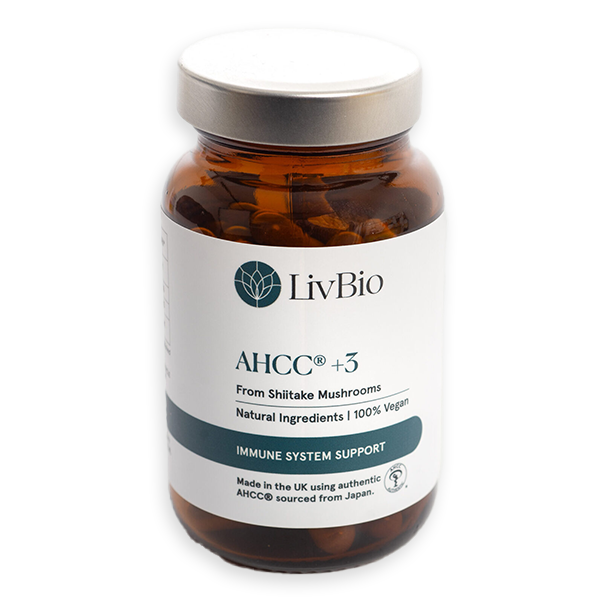
Livbio offers AHCC®+3 which is based on AHCC® from Amino Up but supplemented with zinc, selenium and vitamin C, which play an important role in supporting the immune system.
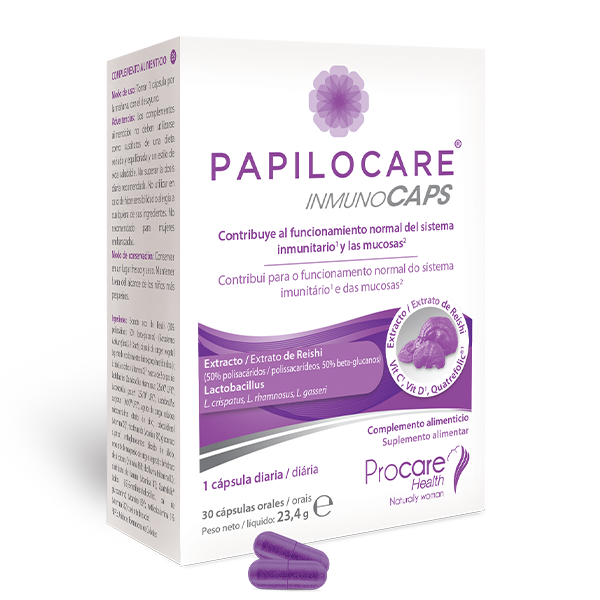
Papilocare® Immunocaps
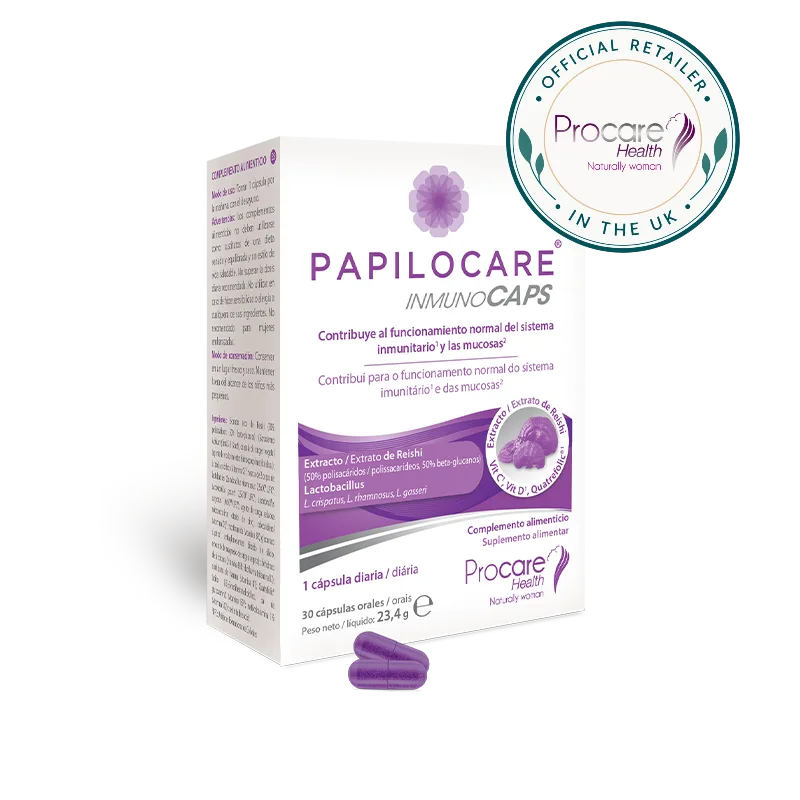
Papilocare® Immunocaps is intended as an extra immune support for people who are using or have used Papilocare® vaginal gel. Papilocare® Immunocaps is a food supplement and its main ingredients are reishi mushroom, which is used in Chinese medicine, and probiotics lactobacillus (L. crispatus, L. rhamnosus y L. gasseri) that help balance the vaginal microbiota.
The product is yet to be tested in clinical trials with patients with HPV although L. crispatus has shown efficacy in a small study.
Regular screening is very important
Whatever you decide about supportive products, cervical screening and appropriate follow-up remain the most important steps you can take. If you are invited for cervical screening, an HPV test or colposcopy, please attend. HPV and early cervical cell changes usually cause no symptoms. Screening allows abnormal changes to be identified and, when necessary, treated before they become more serious.
A positive HPV result can understandably cause anxiety, but it does not mean that you have cervical cancer or that you will develop it. In most cases, the body’s own immune system controls HPV, while screening provides an effective way to identify the smaller number of people who need closer monitoring or treatment.
This information is intended to help you understand HPV and discuss your options with your healthcare professional. It does not replace individual medical advice. The figures are from studies and cannot predict exactly what will happen to any individual woman.
Recommend Products
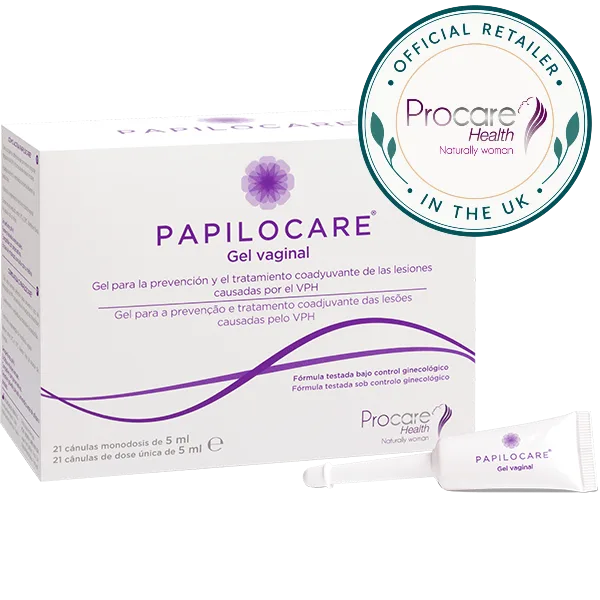
Papilocare® Vaginal Gel
- 7 tubes - £21.70 (£3.10 per tube)
- 21 tubes - £55.45 (£2.64 per tube)
- 84 tubes - £211.80 (£2.52) the original 6 month course
- 105 tubes - £262.25 (£2.50 per tube) the enhanced 6 month course
Price range: £21.70 through £262.25 (VAT included)
 Shop Now
AHCC®+3
- 60 capsules - £42 (70p per capsule)
- 180 capsules - £117 (65p per capsule)
Price range: £42.00 through £117.00 (VAT included)
 Shop Now
Papilocare® Immunocaps
- 30 capsules - £34.30 (£1.14 per capsule)
- 90 capsules - £99.90 (£1.11 per capsule)
- 180 capsules - £195.20 (£1.08 per capsule)
Price range: £34.30 through £195.20 (VAT included)
 Shop Now
Social
Sign up to receive our newsletter and a welcome discount code:
Disclaimer: Information on this website is provided for informational purposes only and not intended as a substitute for the advice provided by your physician or other healthcare professional. You should not use the information on this website for diagnosing or treating a health problem or disease, or prescribing any medication or other treatment. For medical advice, diagnosis and prescription, please consult a healthcare professional. More Information >
Disclaimer: Information on this website is provided for informational purposes only and not intended as a substitute for the advice provided by your physician or other healthcare professional. You should not use the information on this website for diagnosing or treating a health problem or disease, or prescribing any medication or other treatment. For medical advice, diagnosis and prescription, please consult a healthcare professional.
© LivBio Limited 2024 All Rights Reserved.
