
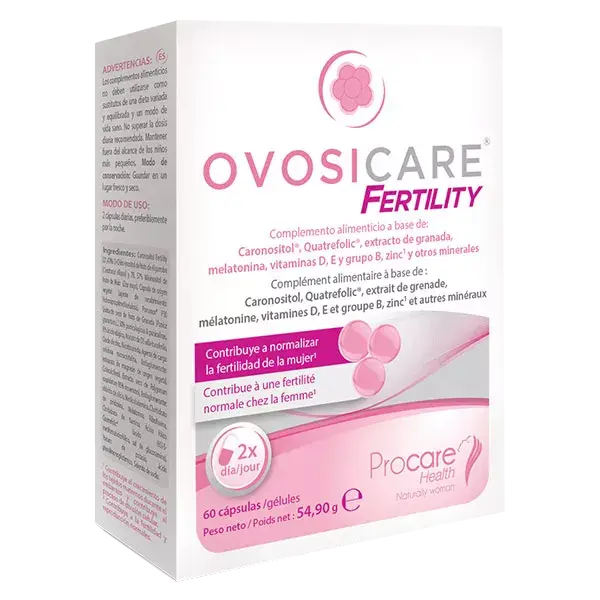







New Ovosicare fertility study reports encouraging pregnancy rates

Early results from a clinical study of Ovosicare Fertility have shown encouraging pregnancy rates among women who had been struggling to conceive, including women with PMOS (formerly PCOS).
In the Fertilob study, 63% of women became pregnant while taking Ovosicare Fertility. The average time from starting the supplement to getting pregnant was 3.3 months.
The findings are particularly interesting because the women taking part were aged 32-38 and had already been trying to conceive for at least six months without success.
The study was sponsored by Procare Health, which makes Ovosicare Fertility. These are early findings and further research is needed to establish how much difference the supplement makes.
What did the study find?
The Fertilob study recruited 235 women aged 32-38 who had been trying to get pregnant for at least six months. Procare Health shared the interim findings of 98 of the women taking part.
The early results showed:
- 63% overall became pregnant, within an average of 3.3 months of starting to take Ovosicare Fertility
- 76% of women aged 35-38 became pregnant
- 53% of women aged 32-34 became pregnant
- 80% of women with PMOS became pregnant, compared with approximately 60% of women without PMOS
- 59% of women who were overweight became pregnant, within an average of 3.7 months.
These findings suggest the results may be relevant to women facing different fertility challenges, including those linked to PMOS and metabolic health.

Social
Sign up to receive our newsletter and a welcome discount code:
Disclaimer: Information on this website is provided for informational purposes only and not intended as a substitute for the advice provided by your physician or other healthcare professional. You should not use the information on this website for diagnosing or treating a health problem or disease, or prescribing any medication or other treatment. For medical advice, diagnosis and prescription, please consult a healthcare professional. More Information >
Disclaimer: Information on this website is provided for informational purposes only and not intended as a substitute for the advice provided by your physician or other healthcare professional. You should not use the information on this website for diagnosing or treating a health problem or disease, or prescribing any medication or other treatment. For medical advice, diagnosis and prescription, please consult a healthcare professional.
© LivBio Limited 2024 All Rights Reserved.
