






Struggling to get IVF on the NHS? Here’s how to help yourself

Thousands of women in England hoping to start or grow their families are finding it increasingly difficult to access IVF on the NHS. We explore why and what you can do.
Infertility treatment in the UK
Despite NHS guidance recommending meaningful support for fertility treatment, the reality is far more limited – and heavily dependent on where you live. NICE IVF guidelines say women under 40 who have been trying to conceive for two years should be offered three full cycles of IVF, and women aged 40–42 should receive one cycle if certain criteria are met.
A full cycle means stimulating the ovaries to produce eggs, collecting and fertilising those eggs and transferring any embryos that result. These recommendations are based on strong evidence showing that multiple cycles significantly increase the chance of a successful pregnancy.
NHS IVF funding
But NICE guidance is not legally binding. Local health authorities known as Integrated Care Boards (ICBs) make their own funding decisions. And due to financial pressures, many do not fully follow the guidance.
The fertility charity Progress Educational Trust reports that almost 70 percent of ICBs now offer only one IVF cycle to eligible women under 40, far below the recommended three. In many areas one IVF cycle on the NHS has effectively become the norm. Even more concerning, many of these are not full cycles: nearly half of all ICBs do not fund the transfer of all viable embryos, meaning patients may not receive complete treatment.
IVF postcode lottery
A common question is how many IVF cycles NHS patients are entitled to. The honest answer is it depends where you live. Four regions reduced their IVF provision in 2025, reflecting growing financial pressure across the NHS. Today, only four percent of ICBs fully follow NICE’s recommendations.
This limited access has serious implications. With one in seven couples estimated to face difficulties conceiving, IVF becomes a crucial pathway to parenthood for many. Yet private treatment can cost £5,000 or more per cycle, putting it out of reach for many families.
Will NHS fertility treatment change?
Updated NICE fertility guidelines are expected in spring 2026. But revising the guidance alone will not solve the problem: ICBs must be properly funded and required to implement national recommendations. For now, NHS-funded IVF remains a postcode lottery – leaving many women with only a single chance at treatment funded by the NHS, and often not even a complete one.
When to see a GP about your fertility
NHS England advises:
- If you are 35 or under, see your GP after one year of trying to conceive without
- success.
- If you are 36 or over, consider seeking advice after six months.
- If you already know you have a condition that may affect fertility – such as irregular periods, endometriosis or polycystic ovary syndrome (PCOS) — speak to your GP sooner.
Early assessment can help identify any underlying issues and guide you through infertility treatment options in the UK.
Supporting your fertility journey: introducing Ovosicare® Fertility
There are steps that you can take to prepare you for conception and pregnancy.
- Avoid toxins and strong chemicals (e.g., tobacco, food additives, detergents, pesticides, etc.)
- Maintain a healthy weight
- Have a balanced diet with good amount of plant-based foods
- Reduce stress and have sufficient sleep
Alongside medical guidance, some women choose to support their fertility with targeted nutritional supplements.
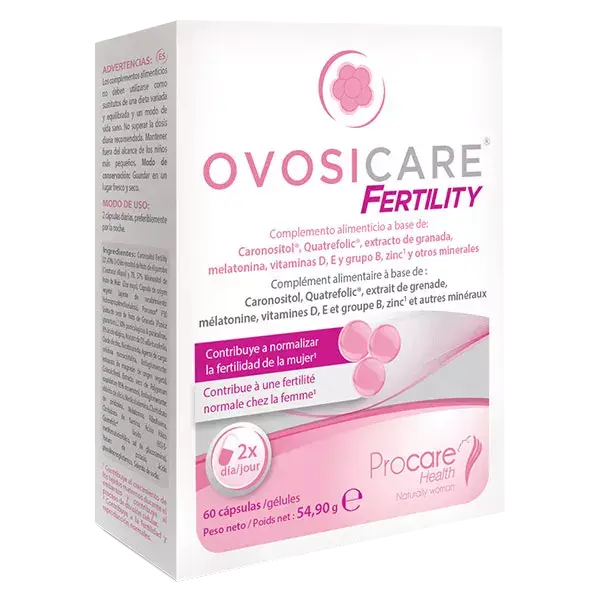
Ovosicare® Fertility is a food supplement designed to help prepare the body for pregnancy as part of a comprehensive clinical approach. It is not a medicine and cannot make pregnancy happen on its own. It is important to seek your doctor’s guidance.
Why choose Ovosicare® Fertility?
Ovosicare® contains a combination of inositol, antioxidants, folic acid, vitamins and minerals that support reproductive health. The formula is designed to:
- support egg quality
- help combat oxidative stress associated with ageing
- support women with polycystic ovary syndrome (PCOS)
It includes vitamins E, D3, B1, B2, B3, B6 and B12, melatonin, selenium and zinc. It also contains Pomanox®, a pomegranate extract rich in polyphenols and vitamin C with antioxidant properties.
As with any supplement, it is important to discuss use with your healthcare professional, particularly if you are undergoing fertility treatment.
Thousands of women in England hoping to start or grow their families are finding it increasingly difficult to access IVF on the NHS. We explore why and what you can do.
Infertility treatment in the UK
Despite NHS guidance recommending meaningful support for fertility treatment, the reality is far more limited – and heavily dependent on where you live. NICE IVF guidelines say women under 40 who have been trying to conceive for two years should be offered three full cycles of IVF, and women aged 40–42 should receive one cycle if certain criteria are met.
A full cycle means stimulating the ovaries to produce eggs, collecting and fertilising those eggs and transferring any embryos that result. These recommendations are based on strong evidence showing that multiple cycles significantly increase the chance of a successful pregnancy.
NHS IVF funding
But NICE guidance is not legally binding. Local health authorities known as Integrated Care Boards (ICBs) make their own funding decisions. And due to financial pressures, many do not fully follow the guidance.
The fertility charity Progress Educational Trust reports that almost 70 percent of ICBs now offer only one IVF cycle to eligible women under 40, far below the recommended three. In many areas one IVF cycle on the NHS has effectively become the norm. Even more concerning, many of these are not full cycles: nearly half of all ICBs do not fund the transfer of all viable embryos, meaning patients may not receive complete treatment.
IVF postcode lottery
A common question is how many IVF cycles NHS patients are entitled to. The honest answer is it depends where you live. Four regions reduced their IVF provision in 2025, reflecting growing financial pressure across the NHS. Today, only four percent of ICBs fully follow NICE’s recommendations.
This limited access has serious implications. With one in seven couples estimated to face difficulties conceiving, IVF becomes a crucial pathway to parenthood for many. Yet private treatment can cost £5,000 or more per cycle, putting it out of reach for many families.
Will NHS fertility treatment change?
Updated NICE fertility guidelines are expected in spring 2026. But revising the guidance alone will not solve the problem: ICBs must be properly funded and required to implement national recommendations. For now, NHS-funded IVF remains a postcode lottery – leaving many women with only a single chance at treatment funded by the NHS, and often not even a complete one.
When to see a GP about your fertility
NHS England advises:
- If you are 35 or under, see your GP after one year of trying to conceive without
- success.
- If you are 36 or over, consider seeking advice after six months.
- If you already know you have a condition that may affect fertility – such as irregular periods, endometriosis or polycystic ovary syndrome (PCOS) — speak to your GP sooner.
Early assessment can help identify any underlying issues and guide you through infertility treatment options in the UK.
Supporting your fertility journey: introducing Ovosicare® Fertility
There are steps that you can take to prepare you for conception and pregnancy.
- Avoid toxins and strong chemicals (e.g., tobacco, food additives, detergents, pesticides, etc.)
- Maintain a healthy weight
- Have a balanced diet with good amount of plant-based foods
- Reduce stress and have sufficient sleep
Alongside medical guidance, some women choose to support their fertility with targeted nutritional supplements.
Ovosicare® Fertility is a food supplement designed to help prepare the body for pregnancy as part of a comprehensive clinical approach. It is not a medicine and cannot make pregnancy happen on its own. It is important to seek your doctor’s guidance.
Why choose Ovosicare® Fertility?
Ovosicare® contains a combination of inositol, antioxidants, folic acid, vitamins and minerals that support reproductive health. The formula is designed to:
- support egg quality
- help combat oxidative stress associated with ageing
- support women with polycystic ovary syndrome (PCOS)
It includes vitamins E, D3, B1, B2, B3, B6 and B12, melatonin, selenium and zinc. It also contains Pomanox®, a pomegranate extract rich in polyphenols and vitamin C with antioxidant properties.
As with any supplement, it is important to discuss use with your healthcare professional, particularly if you are undergoing fertility treatment.

Social
Sign up to receive our newsletter and a welcome discount code:
Disclaimer: Information on this website is provided for informational purposes only and not intended as a substitute for the advice provided by your physician or other healthcare professional. You should not use the information on this website for diagnosing or treating a health problem or disease, or prescribing any medication or other treatment. For medical advice, diagnosis and prescription, please consult a healthcare professional. More Information >
Disclaimer: Information on this website is provided for informational purposes only and not intended as a substitute for the advice provided by your physician or other healthcare professional. You should not use the information on this website for diagnosing or treating a health problem or disease, or prescribing any medication or other treatment. For medical advice, diagnosis and prescription, please consult a healthcare professional.
© LivBio Limited 2024 All Rights Reserved.
